Comment by the Editor-in-Chief | Johannes Frederik Christensen
The Business of Brand Management sheds light on brand management in the context of the present and history. This article is part of a series of republications of selected texts by Olaf Leu and Bodo Rieger from the years 1987 to 2018. What was thought, written and advocated back then is worth re-reading - not out of nostalgia, but because it reflects questions that have not been resolved even today.
The designer is in constant motion. He hops from branch to branch, from job to job. This movement stems from his inner and outer restlessness. It is certainly associated with doubts and fears. Yes, fear of a decline in his creative powers, of repression, of insignificance, of his own works being too similar to those of other designers. He doubts himself, the current standard of his work and at the same time has an insatiable desire for confirmation.
In order to do some justice to this, admittedly vague, topic, even taking history into account, we have to go back a century. In 1919, our profession formed and proclaimed its raison d'être. The Bund Deutscher Gebrauchsgraphiker (BDG) was founded.
This founding of the first professional association in what was then the German Reich, with its headquarters in Berlin, is so interesting for all subsequent generations because all aspects of this professional association were brought together and bundled: The disappointment of not yet being perceived by the public in its importance as one would like. On the other hand, there was the desire to be associated with the visual (applied) arts, combined with the claim to make a direct contribution to culture. In addition, there was the selection process, the qualification to be able to belong to this professional organization at all: Education, activity, work samples. A biography was required - indispensable for later jury work! Today, only rudiments of these aspects remain.
This is where the topic of competitions comes into focus. They also play a role right from the start. They existed for all applications: Stamps, posters, signets, figurative marks, packaging, stationery, brochures, cover designs for books and magazines. And yet there is one very decisive difference to today: it was primarily competitions with prize money (1st, 2nd, 3rd prize and purchases) that were available for a multi-stage result. The BDG, as the sole representative of the profession, acted as a guardian and representative of good manners in most competitions by calling for experts on the jury and as participants.
The threat to publicize poor competitive conditions should not go unmentioned here. The BDG was looking for publicity and needed a media partner. In 1924, Gebrauchsgraphik, published by Hermann Karl Frenzel, was chosen as the official organ. This meant that all forces had been pooled to achieve its goals.
The monopoly position of the BDG, which was able to unite all creative people working in advertising (or advertising at the time) under the umbrella of one organization, played a decisive role. That was, that is the secret of its success, which is diametrically opposed to our current "diversity", the fragmentation of our forces into x associations, clubs, societies, circles, brotherhoods and sisterhoods - and other representations with the claim to want the only right thing ...
The BDG saved many of its pre-war projects into the post-war period and into the now divided Germany. The medium of commercial art, which appeared until 1944 and again from 1950, reinforced its monopoly of influence. The annual competitions Die besten Plakate and Der werbende Umschlag were held under the auspices of the BDG. The Stiftung Buchkunst was looking for the 50 most beautiful books. In the mid-1960s, the first Graphic Design Germany competition was held under the influence of Kontakt im Spessart, a group of prominent graphic designers. For the first time, it included all segments of analog communication.
This "ideal situation", i.e. only one nationally valid competition - and not several at the same time - evaporated in the early 1980s. The BDG was clearly running out of steam. In the meantime, the Art Directors Clubfor Germany had established its own competition and yearbook. The much more suitable English model of an Art Directors and Designers Club remained unconsidered.
Everything that the BDG would have been entitled to was increasingly taken over by other forces, such as the Yearbook of Advertising published by Econ Verlag or a B-2-B competition organized by the Association of German Advertising Consultants (BDW). The scene visibly frayed, with small fires breaking out everywhere.
Peter Zec recognized this, bought the institutionally run Red Dot competition from the Designzentrum Nordrhein-Westfalen for a mere 200 thousand DM and turned it into a private business as Red Dot. He has been successful to this day. Despite all the hostility in the social media, the Red Dot is the most successful private-sector competition and thus a role model for all private initiatives that have emerged over the years. 38 pages of A4 can be printed out if you enter the search term " design competitions " on the Internet today. They are all listed here, all of them "touchingly" and with a lot of chutzpah striving for the recognition of design in the public eye. I list them nonchalantly under "The pharmacies of designers".
The "pharmacies", i.e. competitions, satisfy a demand that comes solely from designers. And because there is so much demand, there are so many "pharmacies".
These "pharmacies" satisfy the designers' need for reassurance, reassurance, blockers and narcotics. They satisfy a demand that emanates solely from designers. And because there is so much demand, there are so many "pharmacies" - i.e. competitions. When trying to fathom why designers take part in competitions where there is no prize money to be won, but at best whimsical Plexi and aluminum figurines and framed certificates, one very quickly gets into a thicket of assumptions.
One of these presumed defense mechanisms is participation in competitions. A win, no matter where and how, can be excellently exploited on your own website, where every "fart competition" is and suddenly becomes prestigious. And the more often designers take part in competitions, the more prestigious the competitions become; they are all Oscars of the industry, impressively staged, analog and digital, in terms of self-promotion. It is a bucket that is poured over potential customers. The whole thing is intended to have a narcotic effect. And it works for naïve customers looking for participants for a pitch.
The "pharmacies" all have their very own sales tricks. First and foremost is the German Design Council. When the Design Award of the Federal Republic of Germany - after all, a national "attempt" - was discontinued without a sound, the German Design Council brought the German Design Award into the public eye as a kind of replacement. This award draws its candidates from the lists of winners of other competitions. The candidates then receive a letter from the Council informing them that they have been nominated. The associated certificate and the use of the Nominated for the German Design Award seal naturally cost a fee - 230 euros.
Well, this sum is manageable, so many recipients invest in this good news. Not knowing that this is not the end of the story. If they are lucky enough to be included in the selection - i.e. the jury - they will have to pay "service fees from 2,080 euros".
The German Design Council is tricky when it comes to "service ideas"; the following offer might make you think of a fire accelerator for competitions. It offers a "seminar" for a fee: "Take advantage of the early bird discount now! We proudly present." It's not just the film business that revolves around international awards. The range of industry and company-specific competitions is large and constantly growing. Participation in a competition should therefore be strategically thought through. In the seminar organized by the German Design Council, Helge Aszmoneit, Head of Information Services, provides a comprehensive overview of current design competitions. After the seminar, she will also provide participants with a tried-and-tested matrix for selecting the right awards and instructions for successful participation. The designer and typographer Kurt Weidemann once invented the "Dreher". It should not be called the Council for Design, but Design for the Council ...
Jochen Rädeker, owner of the design agency Strichpunkt, puts it in the same way. In an article, he writes: "In recent years, design competitions have exploded - including participation and publication fees. In addition to well-founded juried awards, there are increasingly purely profit-oriented providers on the market, which unfortunately also affects formerly reputable organizers. At the same time, the current glut of awards for the top agencies is leading in some cases to six-figure investments in awards that are similar in many of their evaluation criteria and results. We are buying news that is worth less and less for more and more money.
The flood of awards makes it almost impossible for our customers to distinguish between actual differentiating features. The news of being the only one of 22,000 entrants to receive a Black Pencil at the D&AD is completely lost in the news about 500 if awards, because our customers can't tell the difference between the two anyway and boredly conclude that the industry is once again just praising itself. The result: it's no longer worth taking part in the competition."
Awards can also be ordered across the pond. The currency is the dollar. In the east, near New York, the ARC takes over with its Mercury Awards, in the west, in San Diego, the LACP does this. Both organizers are private initiatives. The names of the jury members are not known, but there are plenty of Platinum, Gold, Silver, Bronze and Honor awards. The title of agency of the year is also generously awarded here. It is and remains a mystery how competition organizers judge communication without understanding the language. But: the "Galvanos" exude the spirit of the New World. Madison Avenue was often shrouded in longing. In the past, German participants have always proven that what was not "awarded" at home is great for ARC and LACP and worthy of a title of nobility.
The whole thing is supposed to work like a narcotic. And it works for naïve customers who are looking for participants for a pitch.
One wonders how and why design competitions could degenerate into such a hype? What on earth drives an entire industry into the greedy maws of often dubious and not infrequently incompetent competition organizers? The quality of the jury is not questioned, and people blindly trust brands that only exist on paper and whose only task is to maximize the profits of the competition organizers. And the award winners do their utmost in their own presentation to portray the organizers of winning competitions as renowned. There is no better promotion for the organizers.
What is being lost, indeed has long since been lost, is the appreciation of design performance - not only among all those involved, but also among the public. The more awards, the greater their inflationary effect. It seems that this downward trend can hardly be stopped. Unless, of course, the companies that commission them realize that these competitions and their results have mutated into pure profiteering and that winning an award does not usually reflect design quality.
But when even internal employees in companies use awards to sell their work as a success story - ultimately also to avoid jeopardizing budgets and positions. Then this stampede will probably be unstoppable.
I very much regret this development and hope that at some point someone will turn the tide before everyone - and this may sound pathetic - drowns in the floods of their immeasurable greed for more.
EPILOGUE
The astute and sharp-tongued Wolfgang Beinert from Berlin in his 2025 newsletter: “Unfortunately, the era of idealistic design competitions is over. Today, every provincial town organizes one, everyone participates, everyone judges, and everyone wins. A true inflation of mediocrity.”
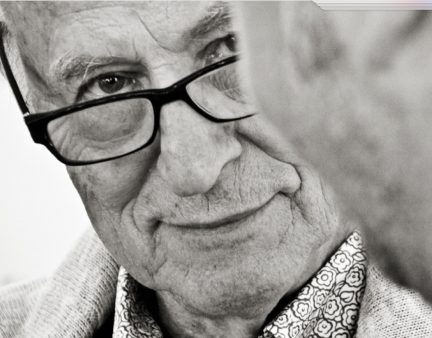
Olaf Leu (1936 *) began his career as a typographic designer at Bauersche Giesserei, was assistant to the creative director at the Hanns W. Brose advertising agency and set up his own studio in Frankfurt am Main in 1959. He made a name for himself as a calendar pope and unconventional packaging designer, as well as the long-standing head of the optics test segment in manager magazin's annual "Best Business Reports" competition. He is "an equally astute and quick-witted design thinker and journalist - as stated in the 2018 laudation for his acceptance as an honorary member of the Typographic Society Munich - brought the TDC, the ADC of New York and Japanese design to Germany and is a critic of design competitions, which he calls "bluff" in many forms. The bar of creative and ethical standards he sets for himself and his design colleagues is in the high-precision range, as can be read in his autobiographical works "Bilanz 1951 bis 1970" - "Bilanz 1971 bis 2011" - "i.R." and "R/80" as well as in "Das Letzte Interview". He has been an author for tbobm.com (THE BUSINESS OF BRAND MANAGEMENT) since 2025.
This article was originally written in German and translated with the assistance of artificial intelligence (AI).

Leave a Reply