
A CITY LIKE NO OTHER.
An interview with Jennifer Rickers about city brands, leadership and
building a new identity for Dortmund.
When Jennifer Rickers took over her role in Dortmund, many things were in a state of flux and some things were not really there yet. There was no consolidated city marketing, no strategically managed city brand and no common understanding of how Dortmund actually wanted to present itself as a city. What there was: committed individual areas, strong stories and a noticeable will to create. But there was a lack of unity.
Three years later, Dortmund is at a different point: with a new brand platform, a consolidated department and a corporate design that is intended to give the city a clearer profile. But what does it mean to develop a city's brand strategy - in the field of tension between administration, politics, the public and lived identity? And what does leadership mean in a context in which participation is more important than control?
A conversation about identity, communication, patience and how a city learns to speak with one voice.
When people look at a new CMO role, they often talk about the first hundred days. With you, the horizon is different: three years rather than three months. Since 2022, you have been shaping an area in Dortmund that has been restructured both strategically and organizationally. What attracted you to move from the private sector to municipal administration back then?
A city is not a product as we know it. That's exactly what appealed to me.
Working for a city - for my city, the city of my birth - means standing up for its identity and helping to shape it. Dortmund has always fascinated me: the honest side, the short distances, the openness to the world.
When I saw the job, I knew immediately that this was it. The opportunity to help shape the energy of this city and move it forward together was what convinced me.
"Our role in marketing and communication is to make the heart and soul of this city visible."
How would you describe your job to someone who has little contact with city marketing or administration?
Everything comes together in a city. Decisions directly affect the people who live here. This is exactly what makes the task so special.
Our role in marketing and communication is to make the heart and soul of this city visible. We want to work out what Dortmund stands for and sharpen this profile both internally and externally. It's about providing orientation: What makes this city special? What is its uniqueness? How can this be experienced by people, in everyday life, at events, in the perception from outside?
When I listen to it, I immediately think of something like the voice of the city. Were there things from your time in business that you consciously had to think differently in a municipal context?
Definitely. It's different to working in business, but not worse, just different. Speed is perhaps the factor that I had to re-evaluate the most. It's not always about being as fast as possible.
We work in a much more complex system: with administration, politics and citizens. This makes participation a central principle. It also requires trust and patience. And above all: in the end, the result belongs to everyone. That is a fundamental difference.
When you started out, there was soon talk of the division being restructured and repositioned. Why was that necessary in Dortmund?
Because Dortmund had long since gone much further than its reputation.
This is the image issue that we have had for a long time: that Dortmund is perceived differently both externally and internally than it actually is. This is precisely why it was important to bring everything together, all marketing and communication topics and the search for the brand essence in general.
We didn't just want to put the next campaign on top of the previous one, but to take a really strategic look: What makes Dortmund special? The image from the outside was lagging behind. And with this restructuring, I believe we have closed precisely this gap.
"It's important to speak with one voice, both internally and externally."
Would you say that this reorganization was also a prerequisite for brand development to become effective at all?
Yes, it is important to speak with one voice, both internally and externally. You can only achieve this if you bundle things centrally and create synergies. Only if everyone knows what the goal is and everyone supports it with their strengths can the brand be successfully positioned externally.
And cities need successful brands. This has become more important than ever in the competition between locations.
What was the biggest hurdle?
First of all, to break down silos. In other words, to create the conditions that make collaboration and a holistic structure possible in the first place.
But the will to change was there. It was crucial to listen: Why did things happen this way in the past? Why was something decided that way? And then deriving strategies together on this basis.
When you look at the development of a narrative for a city: Is that more of a strategic or a cultural task for you?
Both. One doesn't work for me without the other.
Strategy sets the direction. It is the foundation. But it doesn't work without the soul. For me, culture is the soul and breathes life into the brand. It is only through interaction that something is created that can be carried with heart and mind.
"The only one of its kind captures the essence of Dortmund."
The brand platform was also used to adopt the guiding principle and DNA. Why does a city even need something like a guiding principle?
Because a guiding principle provides orientation and shows what a city stands for.
"The only one of its kind" sums up the core of Dortmund. And through our DNA, we have made this even more concrete: honest from the heart, straight to the point, collaborative and open-minded by tradition. These are values that you can not only claim, but also experience. And that is precisely why they are so important for external communication, regardless of the sector in question.
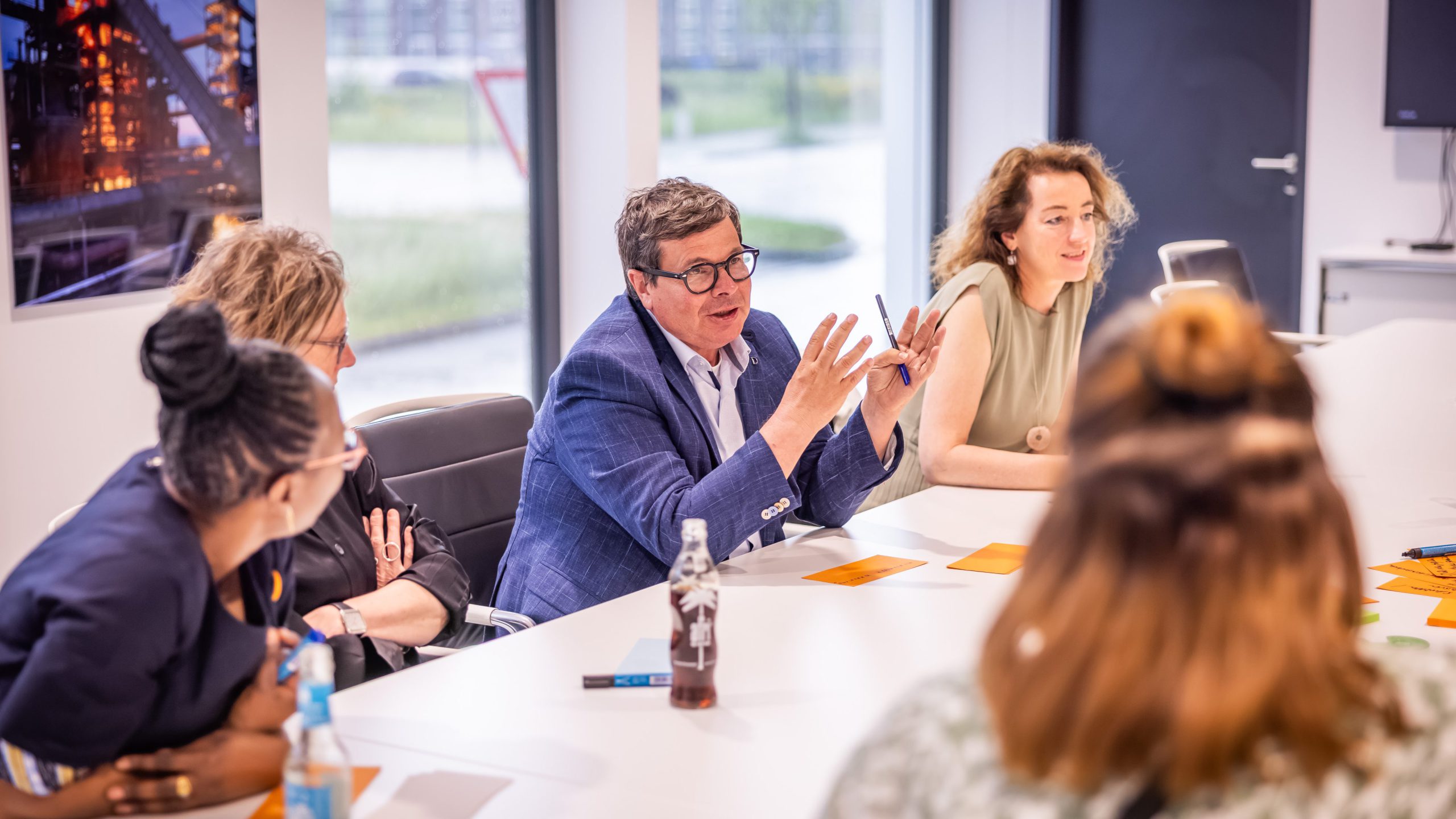
Image: Stadt Dortmund / Stephan Schuetze
How did you get there? Who was involved in this development?
Listening was the starting point. That's why it was clear to us early on that we wanted the process to be participatory. We included over 2,000 voices from Dortmund, both qualitatively and quantitatively.
We brought together business, society, politics, administration, sport and culture, used various formats, conducted interviews, held workshops and established a brand board to accompany the process. With each consolidation, the picture became clearer. And the best thing was actually that when we presented the narrative, nobody said: That's not us. Instead, they said: Yes, that's us.
Were there different directions in the race along the way?
Of course. If you have a lot of conversations, it's logical that not everything is clear from the start. "The only one of its kind" didn't come out of the process as a finished sentence, it was developed.
There were two other routes that we submitted to the committees. But in the end, this direction prevailed with a clear majority. And the decisive factor was not only that it describes the core of the city, but that it also points to the future. A brand is only strong if people in their respective roles can help to fill it with life. It does not belong to one person or one institution. It only works if it is lived.
A process like this always has more difficult and stronger moments. What do you particularly remember?
The time factor was particularly difficult. If you plan to really take a lot of people with you, it takes time. At the same time, the time frame was tight. So my concern was: can we do this in the necessary depth without hearing too few people?
Looking back, it worked surprisingly well. All appointments were full and the willingness to help shape the project was clearly noticeable. That was impressive.
And the best part was definitely the feedback. Really broad, from very different directions. Sometimes it gave me goosebumps, especially when it got personal. That's when I knew that the process had hit something.
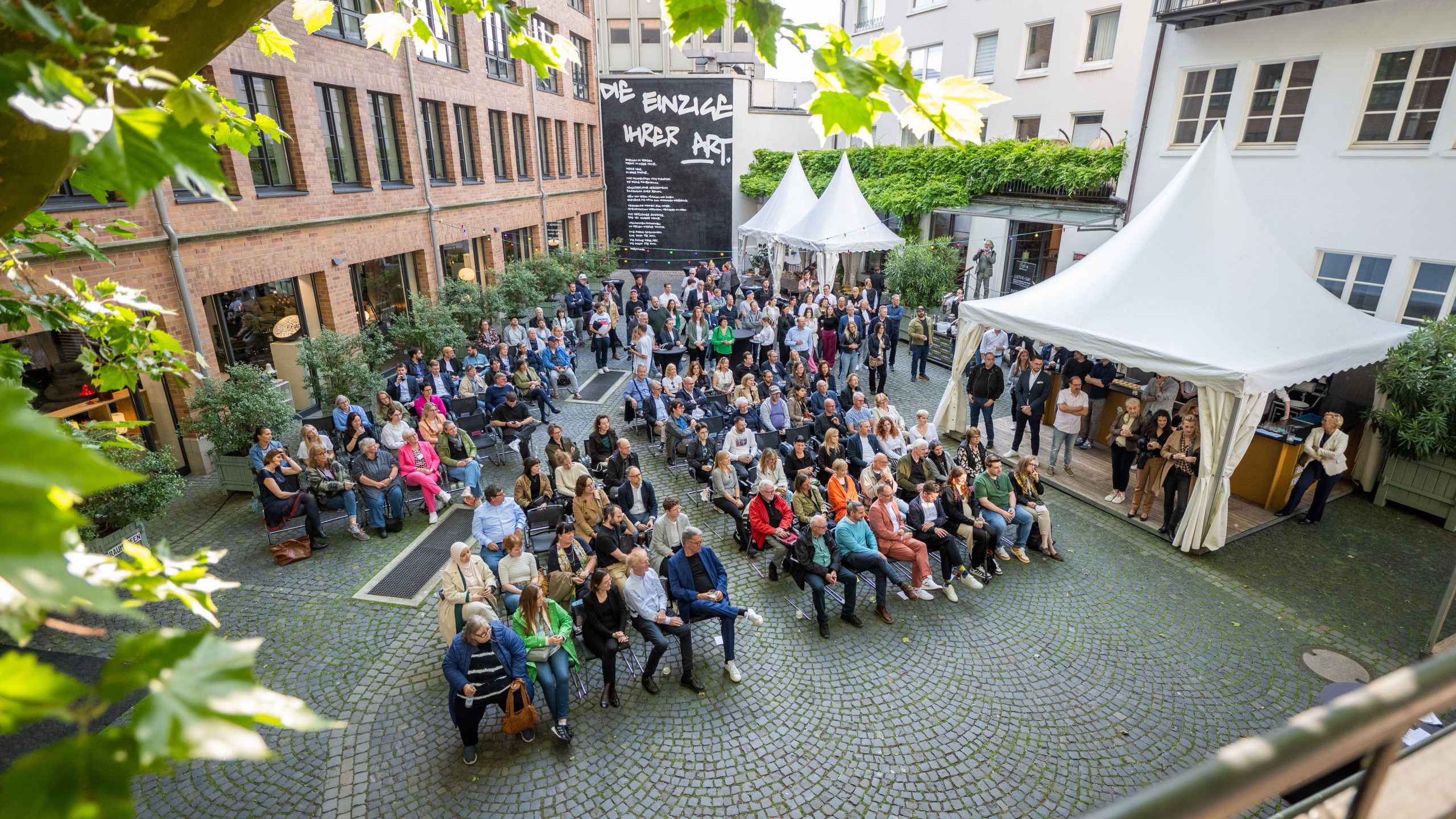
Image: Stadt Dortmund / Roland Gorecki
Was there a moment that made it particularly intense for you?
Yes, the brand launch. That's when everything came together for me.
We were in a place in Dortmund, with music from Dortmund, catering from Dortmund, an artist from Dortmund who realized the narrative as a mural. And the people who helped shape this process were standing there together. At that moment, it was palpable: this is no longer just a strategic process, but something that has arrived in the city. For me, that was the moment when everything came together.
"We can't control minds, but we can touch hearts."
The phase in which the brand is to come to life is now beginning. To what extent can a city control how it is perceived?
We cannot control minds, but we can touch hearts.
That is crucial for us. We set impulses, tell stories, create images. And the rest happens when people find themselves in them. Because the city is the sum of all the people who live here, all the stories, all the companies that are here. If we succeed in triggering this, the effect is self-evident.
What can people look forward to in the coming months?
You can already see it in the cityscape. The new visual design is visible in many places. Dortmund.de was recently converted to the new design. The brand is therefore not only noticeable, but also increasingly visible.
There are more and more points of contact. The city is gradually being painted in our brand colors. Various campaigns from different offices are already running simultaneously. The great thing is that people are coming into ever closer contact with the brand. And it is also increasingly about telling Dortmund's stories not only within the city, but also beyond.
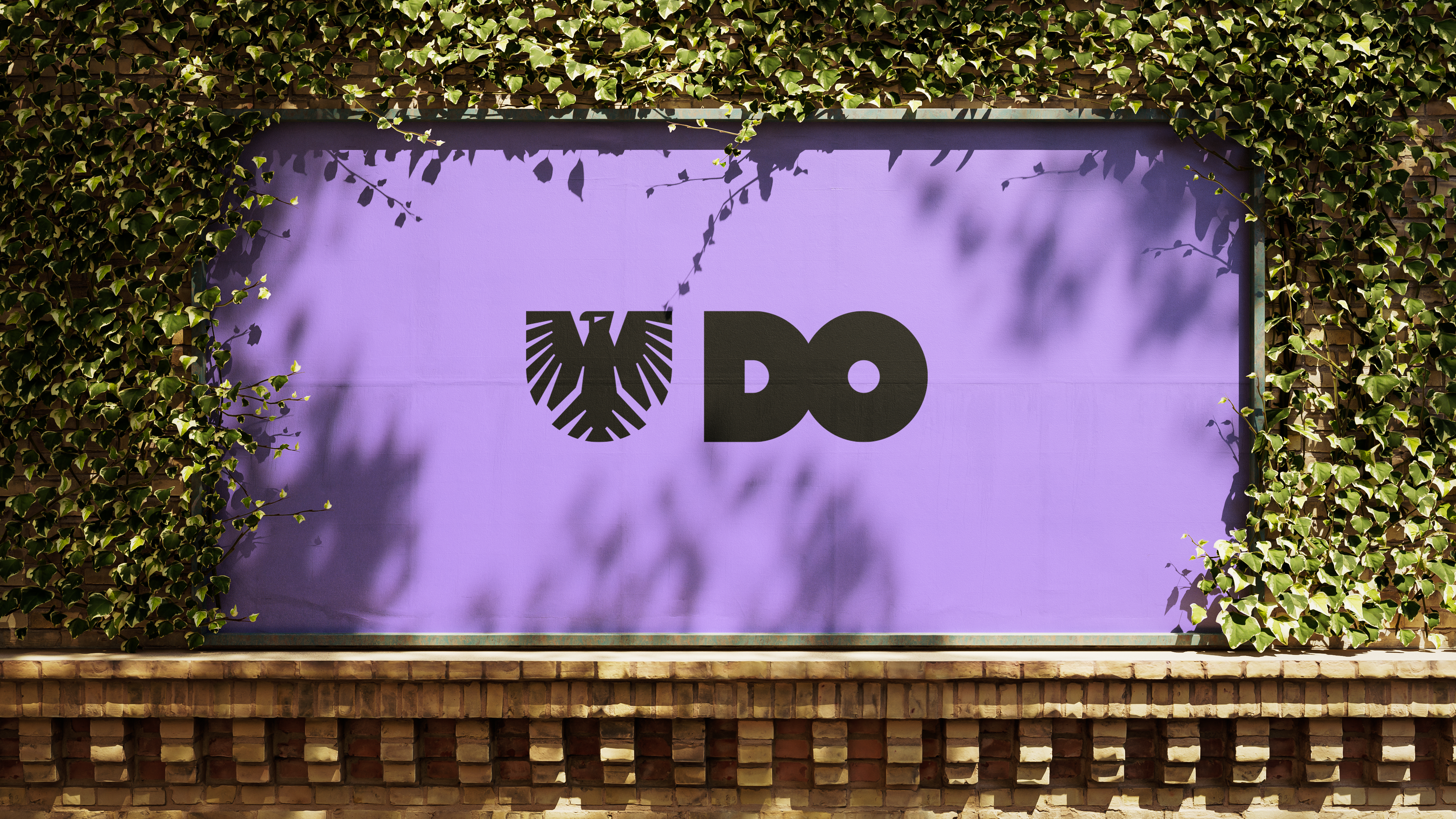
Bild: Stadt Dortmund
Nevertheless, there is always the question of whether a city needs marketing at all. What is your answer to that?
If everything were perfect, nobody would need marketing. But that's not the case.
Cities are alive. People change, perceptions change. That's why a city has to listen and show who it is. For me, marketing is not an end in itself, but the visible self-confidence of a city and the outward expression of its identity.
You are not only responsible for the brand process, but also manage a large, heterogeneous area. What does leadership mean to you personally?
For me, leadership means giving direction, but first of all trust.
Here too, listening is the starting point. Understanding how processes came about, why campaigns were created and the stories behind them. Understanding people and giving them space is the most important thing for me. My job is then to bundle energies, connect them and empower people so that they can shape things themselves.
Especially in an environment where things often take longer than in the private sector: how do you create pride in the team?
By making progress visible.
Celebrating interim milestones and showing what has already been achieved is important. An incredible amount of work and passion goes into it. We have a lot of intrinsic motivation in the team, an enormous will to create. When the first campaigns become visible, the first applications, the first reactions, then pride also arises.
For example, we had a big event in Westfalenpark, where the brand bus was on display for the first time in the new corporate design - visible from afar as a clear statement. Many employees came up to us, congratulated us and wanted to be part of it. Moments like this show that something is growing together. And they make it clear why we are doing all this in the first place.
"Only those who are credible on the inside can also convince on the outside."
What constitutes good communication for you?
Being to the point. Clarity, honesty and empathy.
And above all: only those who are credible on the inside can also be convincing on the outside.
When you look back over the last three years: What have you learned about yourself?
That change takes time.
If you really want to build fundamental strategies, listen and take people with you, it doesn't work overnight. Impatience is not the key. If you keep at it, it's worth it in the end. That's something I've learned very clearly during this time.
So above all: stamina?
Yes, exactly. Stamina.
Looking back, is there anything you would do differently?
Not in principle. I would set up the process again in exactly the same way.
Perhaps I would emphasize some things even more in the past, especially how important it is that the brand is shaped and supported by the entire city. But the path itself was the right one.
Where do you see the greatest potential at the moment?
We have created a new self-image. This is a major milestone and the foundation for everything else. Above all, we have developed it out of the city and not over it. For me, this is a key success factor.
The greatest potential now lies in really bringing this to life. This is a task for society as a whole. It's about networking, bringing different groups closer together, focusing on joint projects and bringing the strength of the individual sectors together even better. Because at the end of the day, it is the people with their everyday stories that make Dortmund what it is. Everyone helps to shape this city, consciously or unconsciously. And that's exactly what needs to be communicated to the outside world.
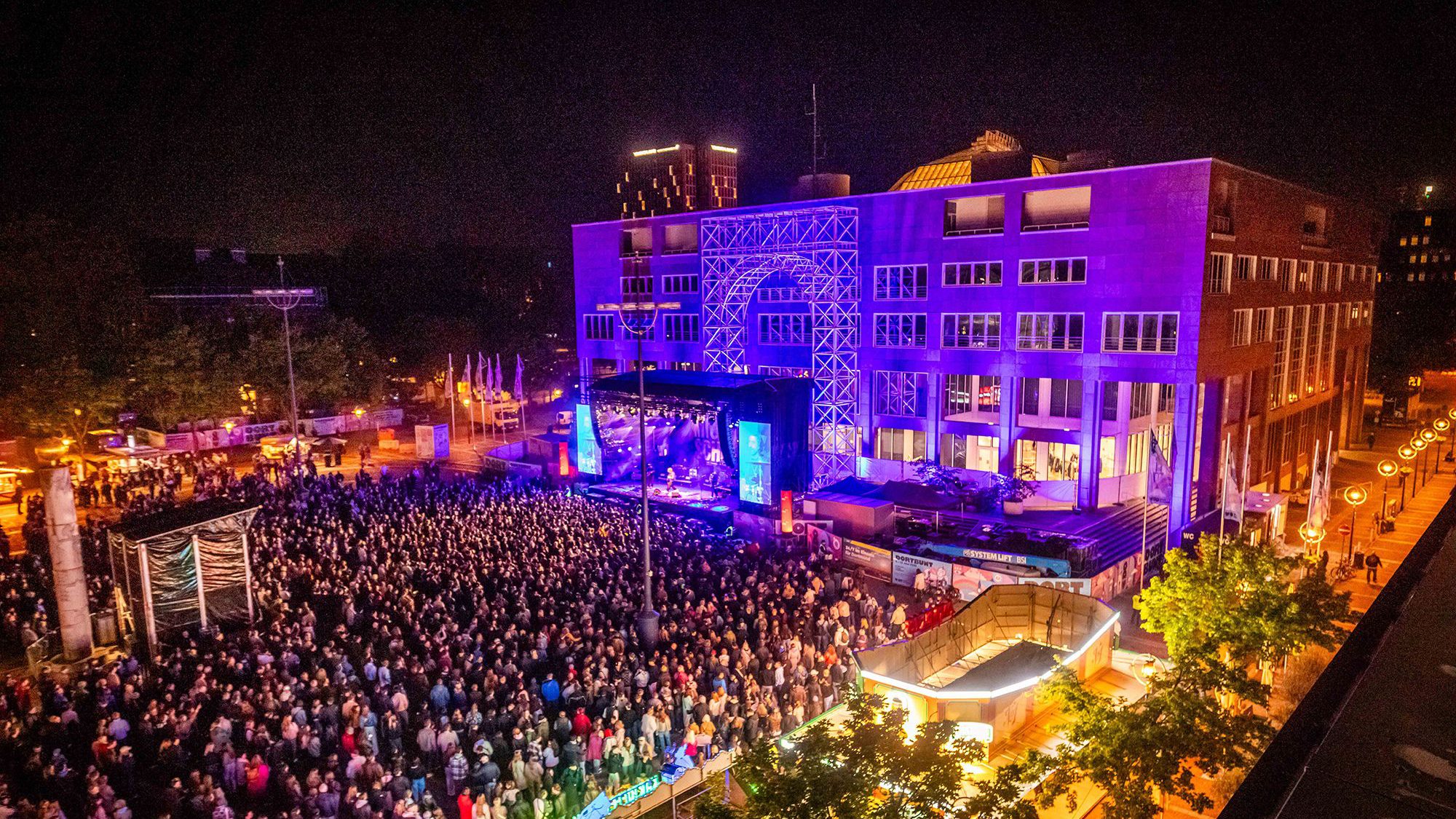
Image: Stadt Dortmund / Roland Gorecki
What will show in the long term whether this brand development is successful?
And measurability, of course. We regularly look at the image within and outside Dortmund, at visitor numbers, at satisfaction. There are various indicators.
But beyond that, it's also about creating occasions and sticking with them. After all, a brand is not created by a single moment, but by continuity.
"Don't start with a logo, start with a coffee."
If you were to give something to a team in another city facing a similar task - what would it be?
Don't start with a logo, start with a coffee.
Listen. Laugh with people, talk to them, find out what makes the city tick. Accept it for what it is. Because we don't want to tell stories that aren't true. We want to make visible exactly what we are at the core. That's the only way to make it authentic.
In short: listen until you hear the heart of the city beating. The rest will come naturally.
When you look back on these three years as a whole - is there one moment or realization that has stayed with you in particular?
Especially the encounters. I was deeply impressed by the will to create in this city.
There are so many movers and shakers in Dortmund, in the administration, in politics, in society. Many want to move this city forward and break down the images that are told about Dortmund that have long since ceased to be true. That's exactly what my work is all about for me: Moving Dortmund forward together.
And when you look ahead to the next twelve months - what are you most looking forward to?
To the fact that "The only one of its kind" is now taking to the streets in the truest sense of the word. That this is becoming visible in projects, in minds and in hearts. For people to say: Yes, that's us in Dortmund - and we're proud of it.
And I'm looking forward to all the stories that are yet to come. We may not even know many of them yet. But we know that we will write them in typical Dortmund style: genuine, loud, heartfelt and unmistakable.
Leave a Reply